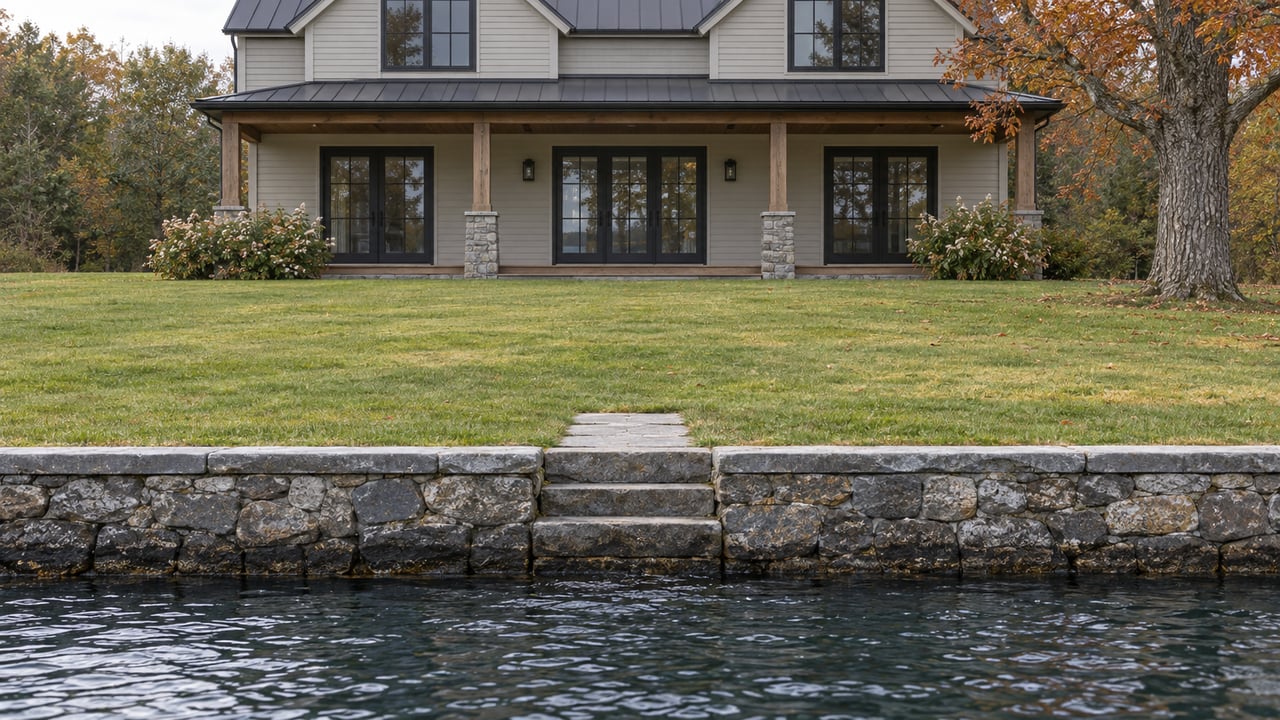
Sometime around October 13, the shoreline along Greenwood Lake will start to change shape. Docks that have sat at the water's edge all summer will end up standing several feet above it. Rocks and stumps that boaters have learned to avoid by memory will break the surface where there used to be open water. None of this is a drought, an equipment failure, or a sign that something has gone wrong with the lake. It is the lake doing exactly what a bi-state plan says it should do this year, for the first time in half a decade.
Greenwood Lake is managed under a formal water level plan, and that plan calls for a five-foot drawdown to begin in 2026, with the cycle repeating every five years after that. If you've lived here through a previous cycle, the math might feel off. The original 20-year state plan called for a drawdown every four years, for a maximum of five drawdowns over the life of the plan. The version New Jersey's Department of Environmental Protection adopted in 2023 stretched that interval to five years and reset the clock, with the new cycle's first drawdown scheduled for this fall. That's a detail easy to miss unless you've read both versions of the plan side by side, and it explains why some longtime residents remember the rhythm running faster than it does now.
A Bi-State Commission, a New Jersey-Owned Dam
The mechanics behind this are less local than most people assume. Greenwood Lake straddles Passaic County, New Jersey and Orange County, New York, and the dam that controls its water level sits entirely on the New Jersey side, in Hewitt, within West Milford Township. Built between 1927 and 1928, the dam stands 18 feet high and runs 270 feet across. Title to the dam and control of its sluice gates belong to the State of New Jersey, split between the Department of Environmental Protection and the Division of Parks and Forestry.
Because the lake crosses a state line, no single town runs the show. The Greenwood Lake Commission, a bi-state body created in 2001 under the Greenwood Lake Protection Act, is the entity that formally requests each drawdown and coordinates the paperwork between New Jersey, New York, the Village of Greenwood Lake, and the Town of Warwick. The commission doesn't own the water and can't unilaterally open the gates. It builds the case, and New Jersey's parks division issues the permit that makes the drawdown official.
The Timing Serves the Weeds Before It Serves Anyone's Boat
The plan sets the start date as the second Tuesday of October, which lands on October 13 this year. That date isn't arbitrary. It's timed to sit right after most recreational boating winds down and to give the exposed lakebed enough cold weather to do its job. A drawdown works by exposing the roots of invasive aquatic plants to freezing air, which kills off growth that chemical treatment and summer weed harvesting can't fully knock back. The commission runs a separate weed harvesting operation each summer, but the drawdown is the tool for what harvesting can't reach.
The exposed lakebed also happens to be the best and cheapest time of the decade to fix a dock or bulkhead. At a 2020 public hearing on an earlier version of this same plan, the commission's co-chair told residents that doing repair work while the lake is down could save property owners two to three times what the same job would cost with the lake full, since crews don't need barges or diving gear to reach the work. If your dock has been on your list for a while, this fall is the window the whole plan is built around.
None of this happens in isolation from the region's water supply. Greenwood Lake feeds the Wanaque River and, downstream, the Monksville and Wanaque Reservoirs, which together supply drinking water to more than three million people and thousands of businesses outside the lake community entirely. That's part of why the plan includes a drought exception. If the DEP commissioner declares a drought warning, or the governor declares a water supply emergency, the drawdown can be delayed or scaled back regardless of what the calendar says.
What Actually Surfaces When the Water Drops
Longtime residents already know some of this from past cycles, but it's worth naming specifically because the hazards move with the water level. The Greenwood Lake Commission currently maintains standing warnings about floating stump islands near Sportsman's Marina, Moose Head Marina, and the Boat House Restaurant, along with submerged rocks at the mouth of Belcher Creek that require boats to stay to the far right of the marker buoys entering the creek. During a full lake, these obstacles sit safely below the surface or under enough water to avoid. During a drawdown, some of that clearance disappears, and features that were never a problem in July can become one in November.
The commission has also run separate projects to physically remove hazards rather than just mark them. In one recent stump reduction effort, crews cut and removed 1,076 stumps at lakebed level in addition to clearing three dangerous floating stump fields, work that took about three weeks and required cooperation from boaters navigating around the project. Whether this fall's lower water reveals new obstacles or confirms that past removal work held up is something residents on the water will see firsthand before any official notice catches up.
The Permit You Need Before the Gate Opens
If you're planning to do any work on your shoreline, dock, or bulkhead during the drawdown, the permit rules differ depending on which side of the state line you're on, and they're worth sorting out before October 13 rather than after.
On the New York side, the state has issued a general permit specifically for drawdown-related shoreline and dock maintenance, which residents can access through the DEC's expedited permit process. The Town of Warwick also asks residents to file a free minor building permit referencing that DEC approval, so the town has a record of where work is happening along its shoreline.
On the New Jersey side, the requirements run through West Milford Township, and they can be more layered. Depending on where a property sits, an owner may need a Highlands Act permit or an exemption from Highlands regulations, and possibly a separate Freshwater Wetland or Flood Hazard permit for work beyond routine dock repair. Personal dredging near the shoreline has historically been restricted to by-hand methods within a limited distance of the property line, a rule the commission has discussed loosening to allow mechanical dredging over a longer stretch, though any change would need sign-off from New Jersey's environmental regulators before it applies. The full Water Level Management Plan lays out which permits apply to which kind of work, and it's a document worth reading in full rather than relying on secondhand summaries, since the specifics shift between drawdown cycles.
The Refill Date Is a Forecast, Not a Deadline
Here's the part that catches people off guard even when they know the drawdown is coming. The plan states that refill begins on or after January 1, but only once ice is loose from most of the shoreline, a call that rests with the Wawayanda State Park Superintendent rather than a fixed calendar date. Commission meeting records from a past cycle describe exactly how much that judgment call can move the timeline. In one instance, the dam's gate was lowered on October 11 as scheduled, but roughly 14.5 inches of rain fell during the drawdown period, and the lake didn't actually reach its target lowered level until January 18, more than three months after the gate came down and more than two weeks past when refill was supposed to begin.
Heavy rain can work in the opposite direction too, once refill starts. The plan calls for a slow refill specifically to avoid damaging docks with heavy ice, which means even a normal winter can stretch the return to full pool later into spring than residents expect. For anyone timing a spring boat launch or an ice fishing trip around a mental note of "the lake refills by New Year's," the honest version is that refill starts around then and finishes whenever the weather allows it to.
For households on the lake, that turns the drawdown from a two-week inconvenience into a season that runs roughly October through late winter, with its own maintenance window at the front end and its own uncertainty at the back end. It's worth marking both dates the way people already track ice-out and opening day, because this year, for the first time in five years, both of them are back on the calendar.
If you live on Greenwood Lake and want to talk through what this fall's water level means for your own stretch of shoreline, or you're just trying to figure out the right time to finally fix that dock, Carmela Lopez Borrazas at SERHANT. knows this lake's rhythms as well as anyone working here. Let's Connect.
This article is general information, not legal, tax or financial advice. Consult a qualified professional about your situation.