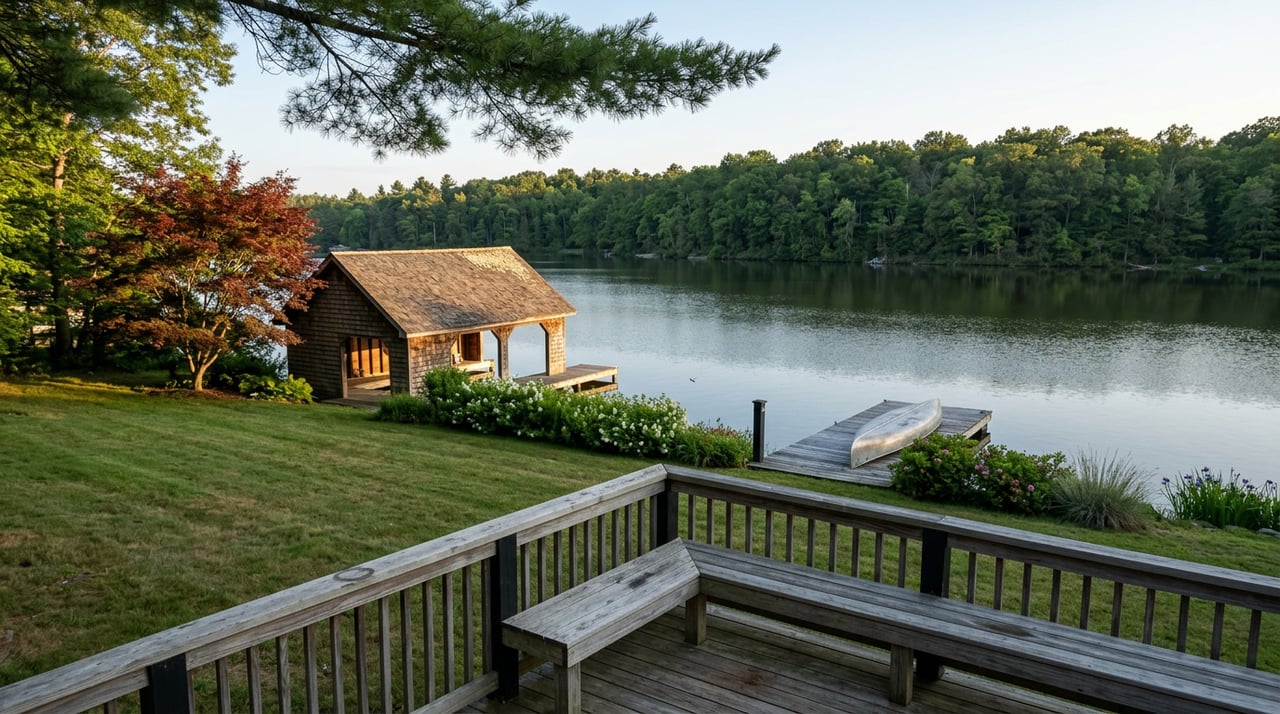
Every dock and bulkhead repair job on Greenwood Lake runs on the same clock, and it has nothing to do with a contractor's schedule. It runs on a state-managed water level plan that drops the lake five feet starting the second Tuesday of October 2026 and doesn't let it rise again until sometime after January 1, 2027. If you are buying, selling, or simply owning waterfront on this lake right now, that calendar matters more than almost anything else in the transaction, because it decides when repair work is legally possible and how long the permitting actually takes.
Most listing photos won't tell you that. A dock with a soft board or a leaning piling reads as a cosmetic fix. On Greenwood Lake, it is a fix that is gated by a natural cycle and a bi-state bureaucracy at the same time, and both of those gates just opened for the first time in five years.
The Five-Foot Window Nobody Puts in the Listing
Greenwood Lake straddles Passaic County, New Jersey, and Orange County, New York, and the state of New Jersey owns the dam that controls it. Under the current Greenwood Lake Water Level Management Plan, developed jointly by the Greenwood Lake Commission and the New Jersey Department of Environmental Protection, the lake is scheduled for a five-foot drawdown beginning the second Tuesday of October 2026, with a gradual release over the first ten days and refill not starting until on or after January 1, 2027, once ice has generally cleared the shorelines.
Here is the detail that actually matters for a transaction: the plan moved this cycle to a five-year interval. Earlier notices from the Town of Warwick, covering the prior drawdown, described a four-year cycle. The updated plan resets the schedule to 2026 and every five years after. That means the last real opportunity most homeowners had to legally work on an exposed shoreline was years ago, and this October is the first chance since then. If you're evaluating a waterfront listing with a dock that looks like it's been waiting for attention, there's a good chance it has been waiting for exactly this.
Two States, Two Permit Paths, One Dock
The lake's split jurisdiction means a repair on the New York side and the identical repair on the New Jersey side don't follow the same paper trail. Buyers comparing a Greenwood Lake, NY listing against one across the state line in West Milford Township, NJ are comparing two different regulatory processes, not just two tax bills.
| Step | New York side | New Jersey side |
|---|---|---|
| Local approval | Village of Greenwood Lake building permit is required for any dock construction or major repair under the village zoning code | Highlands Act "in-house exemption," typically processed through West Milford Township rather than filed directly with NJDEP |
| State review | New York State DEC sign-off, with an expedited process historically available for routine maintenance work | Freshwater Wetland Permit tied to the drawdown itself, administered at the state level |
| Federal layer | Army Corps of Engineers review applies because Greenwood Lake is classified as a non-assumed interstate water, requiring a Nationwide Permit for in-water work | Same federal classification applies on the NJ side for equivalent work |
| Who it applies to | Any owner doing dock, bulkhead, or shoreline work | Single-family homes lawfully in existence before August 10, 2004, with no further subdivision since; commercial marinas need a formal exemption instead |
The village zoning code spells out one more wrinkle worth knowing before you write an offer: a repair or reconstruction involving more than half of an existing dock's structure gets treated as new construction for permitting purposes. A homeowner who thinks they're patching a dock may actually be triggering the full approval process, Army Corps review included.
What This Means If You're Closing This Fall
If you're under contract on Greenwood Lake waterfront right now, the drawdown changes two things about how you should be thinking about the deal.
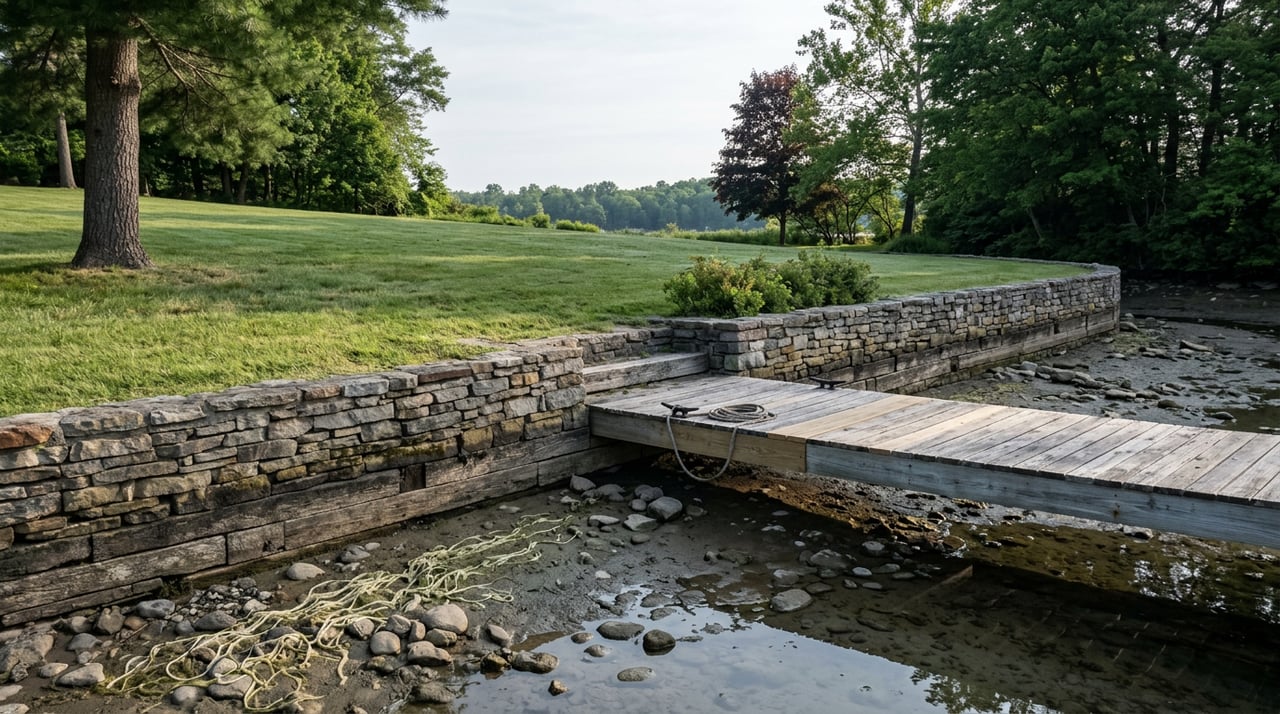
For buyers, the exposed lake bottom this October and November is a rare due-diligence window. Dock pilings, bulkhead condition, and shoreline sediment that are invisible at normal pool level become visible once the water drops. If your inspection or final walkthrough can be timed after the drawdown begins, you'll see the property's waterfront condition in a way that summer photos can't show. That's leverage worth asking your agent about before you lock in an inspection date.
For sellers sitting on deferred dock or bulkhead maintenance, this is the window to actually do the work rather than promise it. Waiting means waiting five more years, and a dock repair that stalls in the Army Corps or Highlands Act process doesn't resolve itself before a spring closing. If you're planning to list next year, the smart sequence is permit this fall, repair while the shoreline is exposed, and list once it's finished rather than negotiate a credit for work that can't legally start until 2031.
Buyers should also ask a direct question before waiving any contingency: has the seller already filed for the relevant permits, or does that paperwork start after closing? A dock repair that looks like a two-week job on paper can run considerably longer once village, state, and federal review are all in the chain, and a five-year gap between windows means there's no quick second chance if the timing slips.
Two Lakes, One Name
One more distinction trips up buyers who are new to the area. Upper Greenwood Lake is not the same body of water as Greenwood Lake, despite the name. It's a separate, privately governed lake administered by the Upper Greenwood Lake Property Owners Association, not the bi-state Greenwood Lake Commission that manages the drawdown described above. On Upper Greenwood Lake, you don't apply to a village or a state DEC for a dock. You apply to the POA's dock committee, become a member, pay annual dues plus an easement fee, and get assigned a dock space, capped at 4 feet by 18 feet, in the order your application was received.
If a listing description says "Greenwood Lake" and you're not sure which body of water it actually touches, that's worth confirming before you assume anything about permits, water levels, or dock rules. The two lakes sit near each other, but the rulebooks don't overlap at all.
A Few Questions Worth Asking Before You Sign
Does the October drawdown affect swimming or boating on the main lake this fall? The drawdown lowers the water level by five feet starting in October, which is already past the primary boating season for most owners, but it does mean the lake will look and behave differently through the winter than it has in past off-seasons. If recreational use timing matters to your decision, ask specifically what water level to expect for any month you're considering.
What if my closing date falls in the middle of the drawdown window? It doesn't change the closing itself, but it's worth walking the shoreline with your agent or inspector after the water has dropped rather than relying only on pre-drawdown photos, since that's when structural issues with docks and bulkheads are easiest to see.
Is Upper Greenwood Lake on the same water level schedule? No. Upper Greenwood Lake operates independently under the UGLPOA, and its own dock and lake management rules are separate from the bi-state plan that governs the main lake's October 2026 drawdown.
Waterfront property here rewards buyers and sellers who understand the mechanism behind the market, not just the price per square foot. If you're weighing a Greenwood Lake listing this fall, on either side of the state line, or trying to figure out which lake a property actually borders, Carmela Lopez Borrazas can walk the shoreline with you and make sense of the timing before you make an offer. Let's Connect.